
Japanese Streetwear Aesthetic: How to Build the Look in Australia
Japanese streetwear is defined by considered graphics, quality fabric, and proportions that feel relaxed but deliberate. It pulls from a long tradition of detail-led design — cultural motifs like dragons, temples, and Mount Fuji rendered with precision on heavyweight pieces built to last. In Australia, the aesthetic translates cleanly: the oversized silhouettes suit the climate, the graphic language is distinct, and the pieces mix into most existing wardrobes. Here is how to build the look from the ground up.
In this article
- What is the Japanese streetwear aesthetic?
- What are the key pieces in a Japanese streetwear wardrobe?
- How do you style Japanese streetwear graphics without overdoing it?
- How does Tidy Tokyo interpret Japanese streetwear?
- How do you build a Japanese streetwear outfit step by step?
- What makes DTG printing the right fit for Japanese streetwear graphics?
- Frequently asked questions
What is the Japanese streetwear aesthetic?
Japanese streetwear emerged from the Ura-Harajuku scene in Tokyo during the 1990s — a counterculture movement that fused American workwear, hip-hop influences, and traditional Japanese iconography into something entirely its own. Brands like A Bathing Ape and Neighborhood established the visual language: bold graphics on heavyweight blanks, limited production runs, and a sharp eye for quality fabric and construction.
By the 2020s, the aesthetic had moved well beyond Tokyo. The core principles stayed consistent: graphic-led design over logo-chasing, relaxed-but-structured silhouettes, cultural references rendered with intention rather than as decoration. In 2026, Japanese streetwear continues to be one of the most cited aesthetic references on platforms like Pinterest and TikTok, particularly in markets like Australia where the mix of surf culture and urban street style creates room for something more visually distinctive.

What are the key pieces in a Japanese streetwear wardrobe?
The foundation is a heavyweight hoodie or oversized tee with a strong graphic. Japanese streetwear does not rely on subtle branding — the imagery is front and centre and the rest of the outfit is built around it. From there, the core wardrobe looks like this:
- Graphic hoodie (drop-shoulder or boxy fit) as the centrepiece
- Mineral wash or garment-dyed tee for a worn-in, textured base layer
- Straight-leg sweatpants or cargos — not tapered, never skinny
- Zip-up hoodie as a layering piece worn open
- Clean sneakers with visual weight — chunky soles work well
The silhouette runs relaxed throughout. Wide shoulders, straight legs, not oversized for the sake of it but proportioned intentionally. Accessories are kept minimal — the graphic is the statement.
How do you style Japanese streetwear graphics without overdoing it?
One graphic per outfit. This is the single most important rule. If your hoodie has a Dragon graphic, keep the sweatpants clean or match them from the same design. If your tee has a Mt Fuji print, the bottom half is plain. Two competing graphics from two different sources cancel each other out and the whole look loses its focus.
Colour is where you have room to experiment. A black hoodie with a white Dragon graphic pairs with almost any neutral bottom — black, grey, olive, stone. A washed or mineral-dyed tee reads as part of the aesthetic even without additional graphic detail, because the garment treatment itself carries visual character.
When in doubt: let one piece lead and build the rest of the outfit in support.
How does Tidy Tokyo interpret Japanese streetwear?
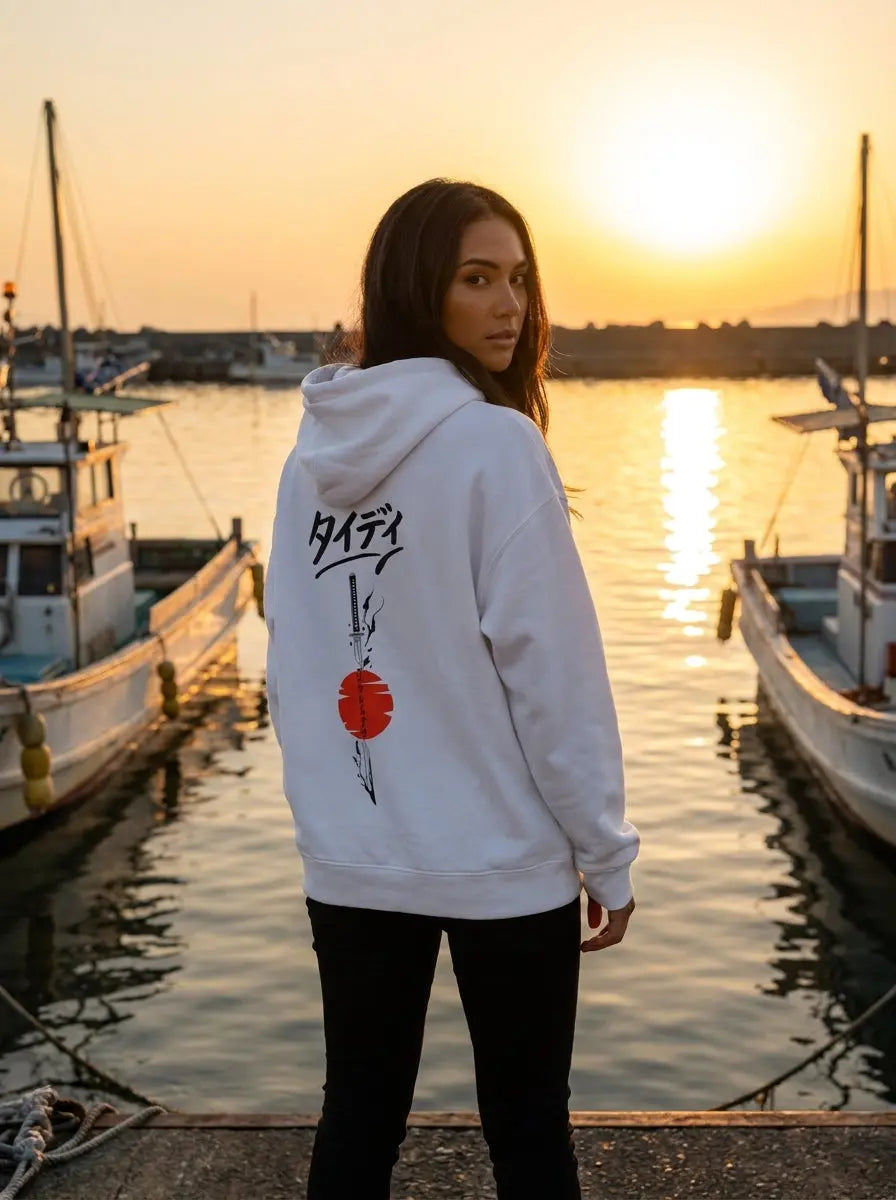
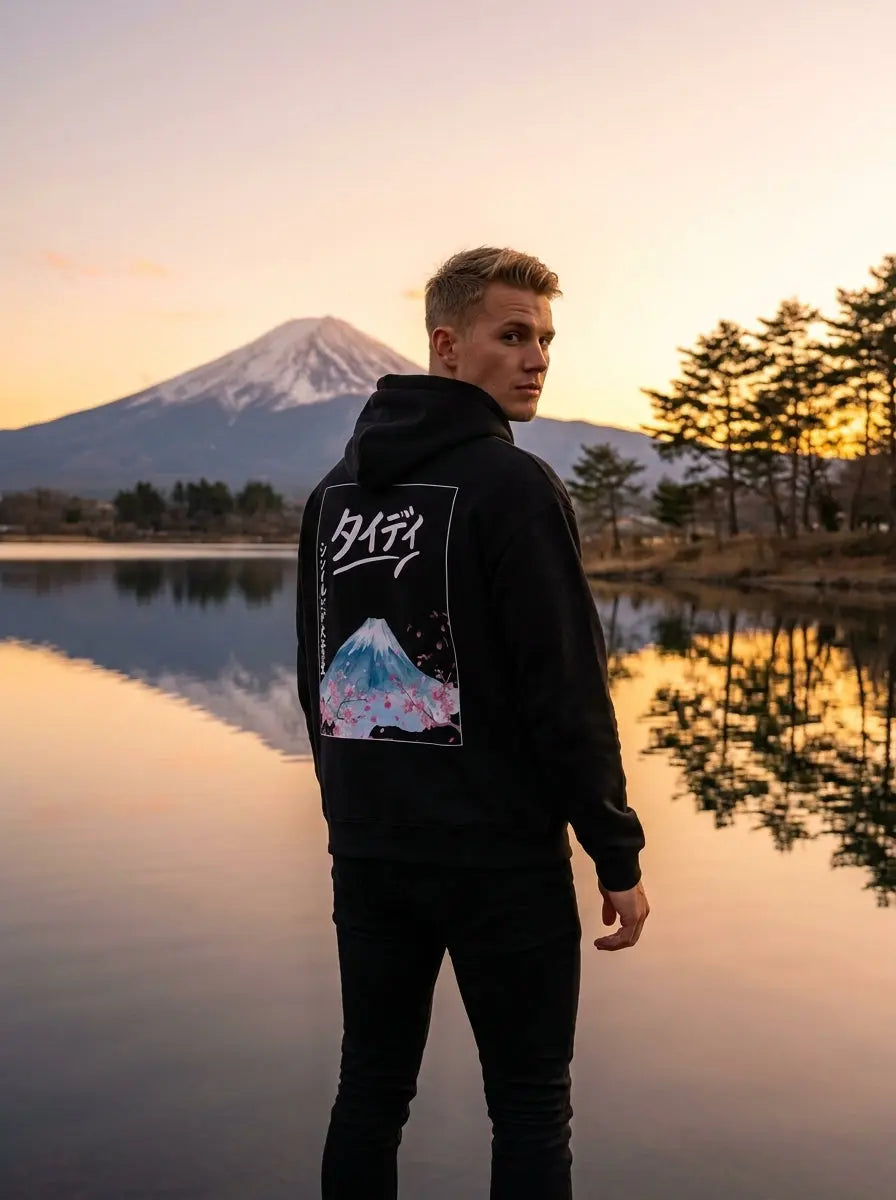
The Tidy Tokyo range is built around four cultural graphics: Dragon, Mt Fuji, Rising Sun, and Temple. Each one is a recognisable Japanese reference rendered with precision on drop-shoulder hoodies, zip-ups, mineral wash tees, and sweatpants. The pieces are cut unisex with a relaxed-but-intentional silhouette that fits the aesthetic without copying any single reference directly.
The fabric choices reflect what the aesthetic actually demands. Midweight fleece on the hoodies. Mineral wash cotton on the tees, where the garment treatment creates a worn vintage texture that no two pieces replicate exactly. Every graphic is printed using top-of-the-range DTG machines — more on that below.
White Logo. Unisex. Drop-shoulder fit with Japanese-inspired Dragon graphic.
How do you build a Japanese streetwear outfit step by step?
Start with one graphic piece and work outward. Here are three starting points using the Tidy Tokyo range:
The Hoodie-Led Look: Tidy Tokyo Dragon Drop-Shoulder Hoodie (White Logo) as the centrepiece. Pair with black cargos or the matching Dragon Sweatpants, clean white sneakers, and nothing else competing for attention. The Dragon graphic is the outfit.
The Tee-Led Look: Tidy Tokyo Mt Fuji Mineral Wash Tee as the base. The washed texture gives it instant character. Wear it with straight-leg black pants or shorts and a lightweight jacket or zip-up hoodie over the top, open. The mineral wash finish means it reads as Japanese streetwear even without a bold logo.
The Layered Look: Tidy Tokyo Temple Zip-Up Hoodie (White Logo) worn open over a plain black tee. Dragon Sweatpants or straight-leg cargos below. This is the most versatile outfit in the guide — the zip-up layers or removes depending on temperature, and the Temple graphic at the front reads clearly whether it is zipped or open.

White Logo. Mineral wash finish — no two pieces come out exactly the same.
What makes DTG printing the right fit for Japanese streetwear graphics?
Japanese streetwear graphics demand precision. A Dragon rendered with blurred edges or a Temple motif that fades after a few washes undermines everything the aesthetic is built on. That is why print quality matters here more than in most other streetwear categories.
Tidy Tokyo uses top-of-the-range Direct-To-Garment (DTG) machines with eco-friendly, water-based inks to print every graphic directly onto the garment. DTG printing applies ink at the fibre level rather than sitting on top of the fabric the way traditional screen printing does. The result is vibrant, high-detail graphics that hold their colour and definition through regular wear and washing — which is exactly what complex cultural imagery like a Dragon or Mt Fuji requires to stay sharp.

White Logo. Full-zip midweight fleece. Temple graphic DTG printed with water-based inks.
Frequently asked questions
What is Japanese streetwear called?
The broader category is often called Ura-Harajuku style or Japanese street fashion, named after the Tokyo neighbourhood where it emerged in the late 1980s and 1990s. Sub-categories include Techwear (functional, technical fabrics), Ura-Harajuku (graphic-heavy, limited-run pieces), and Gyaru (fashion-forward feminine streetwear). What most people mean when they say "Japanese streetwear" in 2026 is the Ura-Harajuku lineage: bold cultural graphics on heavyweight blanks, relaxed silhouettes, quality construction.
Is Japanese streetwear popular in Australia?
Yes and growing. Australian streetwear has always drawn from multiple international references — American workwear, UK grime aesthetic, and increasingly Japanese graphic culture. The relaxed fit and bold imagery translates well to the Australian market, and the unisex construction of most Japanese-influenced pieces suits the way Australians actually dress.
How do you mix Japanese streetwear with everyday clothes?
Start with one Japanese-influenced piece and build around basics. A Tidy Tokyo Dragon hoodie works with plain black jeans or cargos just as well as it does with matching sweatpants. The graphic is the statement — the rest of the outfit can be straightforward. You do not need to commit to a full aesthetic to wear one strong piece well.
What does DTG printing mean on streetwear?
Direct-To-Garment (DTG) printing is a method where ink is applied directly to fabric using high-precision inkjet technology. Unlike screen printing, which layers thick ink on top of the fabric, DTG ink bonds at the fibre level, producing detailed, vibrant graphics that flex with the garment rather than cracking. With eco-friendly, water-based inks, it is also a cleaner process than traditional methods. For complex Japanese streetwear graphics, DTG is the standard that keeps the detail intact over time.
What shoes work with Japanese streetwear?
Chunky sneakers are the default — Nike Air Max, New Balance 9060, Asics Gel-Kahana, or similar silhouettes with visual weight at the sole. Clean, low-profile trainers work if you want a more minimal result. The main rule: avoid anything too formal or too sport-specific. The aesthetic lives between those two categories.
Shop the Tidy Tokyo Collection
Dragon, Mt Fuji, Rising Sun, Temple. Japanese-inspired streetwear printed with precision and built to last.
Shop Tidy Tokyo →